Healthy Conflict Makes Teams Stronger

Ask a room of people how badly they’d want to know if something they were doing wasn’t working for their team, and nearly everyone gives the same answer: tell me right away. Then ask how willing they would be to give the same feedback to a coworker. A lot fewer people will jump at that opportunity. Most people want direct feedback but hesitate to actually give it.
That gap shapes how conflict plays out at work. A disagreement that could have improved a decision doesn’t come up in the meeting and gets rehashed in the parking lot instead, or it builds until it boils over. The conversation everyone avoided ends up doing more damage than the one they feared.
A team in conflict can be a team that’s thinking hard about its work. Whether that conflict helps or hurts depends on where it comes from and what it turns into.
What Counts as Conflict
Conflict happens when one person can’t reach a goal without affecting someone else’s. Picture two coworkers heading to lunch. One wants burgers, the other wants tacos. If they drive separately, both get what they want. If they share a car and have 30 minutes, they have a conflict.
Plenty of workplace friction falls short of that bar. A coworker’s annoying habit is an irritation. A difference of opinion that blocks no one’s work is a disagreement. Conflict starts when goals collide, and it gets heated when people feel something they value, such as respect or the quality of their work, is under threat.
Good communication won’t prevent all of it, either. Two people can understand each other perfectly and still disagree strongly. Leaders who treat every conflict as a communication problem end up fixing the wrong thing.
Productive vs. Unproductive Conflict
Productive conflict keeps competing ideas in play while people still feel respected. A team pressure-tests a plan, argues it out, and lands on a better answer than anyone brought into the room.
Unproductive conflict turns personal. People get defensive, dig in, and go after each other instead of the problem. Assumptions and judgment take the place of curiosity, and the work stalls.
Conflict also varies in how visible it is:
- Overt: Out in the open, where the team can see it and work through it. Most productive conflict is overt.
- Covert: Hidden or passive. It shows up as the side conversation after the meeting, the eye roll, or the complaint that never reaches the person it’s about. Covert conflict wears a team down while no one names it.
- Latent: Tension sitting inside a broken system or structure. It hasn’t surfaced yet, but it will.
Healthy teams make it normal to bring covert conflict into the open, where everyone can deal with it.
Find the Source Before Choosing the Fix
Treating the wrong problem makes conflict worse. Most workplace conflict comes from one or more of four sources:
- Task: People disagree on the goal.
- Process: People agree on the goal and disagree on how to reach it, who decides, or who owns what.
- Relationship: The friction has become personal.
- Worldview: Values or beliefs differ, often on topics a workplace doesn’t need to settle.
Productive disagreement usually stays in task and process territory. Trouble starts when a task disagreement slides into a relationship conflict, which happens faster than most people notice.
Two mental shortcuts speed up that slide into conflict.
The first is the ladder of inference. When information is missing, people fill the gap with a story they tell themselves, pick out the facts that fit the story they have made up, and walk into the next conversation braced for a fight.
The second is the fundamental attribution error. When a coworker misses three standup meetings in a week, people tend to blame character: lazy, disrespectful, checked out. When they miss those meetings themselves, they don’t think it’s a flaw in their own character. Instead, they think of the highway construction or the client call that went long.
In either situation, these shortcuts lead to increased conflict. The team ends up arguing about a person, and the original concern about the work goes unaddressed.
When the System Is the Problem
Some conflicts look personal and are structural. A common example plays out between sales and operations:
- The clash: Sales promises customers fast turnarounds and heavy customization. Operations pushes back because quality suffers.
- The misdiagnosis: Leadership sees two department heads who can’t get along and tries to repair their relationship.
- The cause: Each department is measured against goals that work against the other’s, so the system rewards the conflict. Put the most cooperative people in the world in those two roles, and they’ll still clash.
- The fix: Shared success measures, where both teams win only when they win together, tend to do more than a communication workshop.
Scope matters too. A conflict between two people calls for a conversation between those two people. A team-wide reminder that everyone knows is aimed at one person fixes nothing.
Naming the source is the first step. Choosing how to respond, and in what order, takes a different set of skills.
Psychological Safety Changes the Kind of Conflict a Team Has
Many leaders assume a psychologically safe team argues less. Harvard Business School professor Amy Edmondson’s research points in a different direction.
Edmondson describes psychological safety as a shared belief that a team is safe for interpersonal risk-taking. In one of her early hospital studies, she expected the strongest nursing units to report the fewest medication errors. They reported more. The difference came from what nurses felt safe to say: on the stronger units, people brought errors into the open, so problems got caught and fixed.
Conflict follows the same pattern. Psychological safety doesn’t set how often a team disagrees. It changes what those disagreements look like. People speak up, admit mistakes, ask questions, and challenge norms without fear of payback, and the tension stays on the work. When everyone agrees with the loudest voice in the room, the team has groupthink, which often signals low psychological safety.
Google’s research into what makes teams effective, known as Project Aristotle, found psychological safety mattered more than any of the other team dynamics it measured. Gallup found that only three in 10 U.S. workers strongly agree their opinions seem to count at work, and that moving that figure to six in 10 could mean a 27% reduction in turnover, 40% fewer safety incidents, and 12% higher productivity.
The Other Half: Knowing What to Do
Knowing why conflict goes wrong makes it easier to spot. Changing how a team handles it takes more. Teams still have practical questions to answer:
- Which response fits: Push for a decision, let the issue go, or work toward an answer that serves both sides?
- How the conversation should go: What does a tense conversation sound like when it goes well, from the first observation to an agreed next step?
- What to ask: Which questions, asked consistently, make it easier for people to speak up?
The answers take practice. That includes learning each person’s default response to conflict, building emotional intelligence, and getting comfortable with difficult conversations. Teams learn to work through conflict together one small choice at a time. Anyone who asks “What am I not seeing here?” and listens to the answer has already started.
Ready to Start?
Put It into Practice with Our Free Webinar
Frontline Training Solutions’ free webinar, Turn Workplace Conflict into Your Strategic Advantage, covers what to do once the source of a conflict is clear. It walks through the five common ways people respond to conflict and when each one fits, a three-step model for working through tense conversations, and the questions leaders can ask each week to build psychological safety. It’s made for leaders, HR professionals, and anyone who wants their team’s disagreements to lead somewhere useful.
Watch on demand for the tools to turn conflict into progress on any team.
Explore More Resources
Frontline has everything you need to know about training your team to get stronger and rise to every work challenge. Explore our webinars, podcast, magazine, and more blog posts today!
About the Author
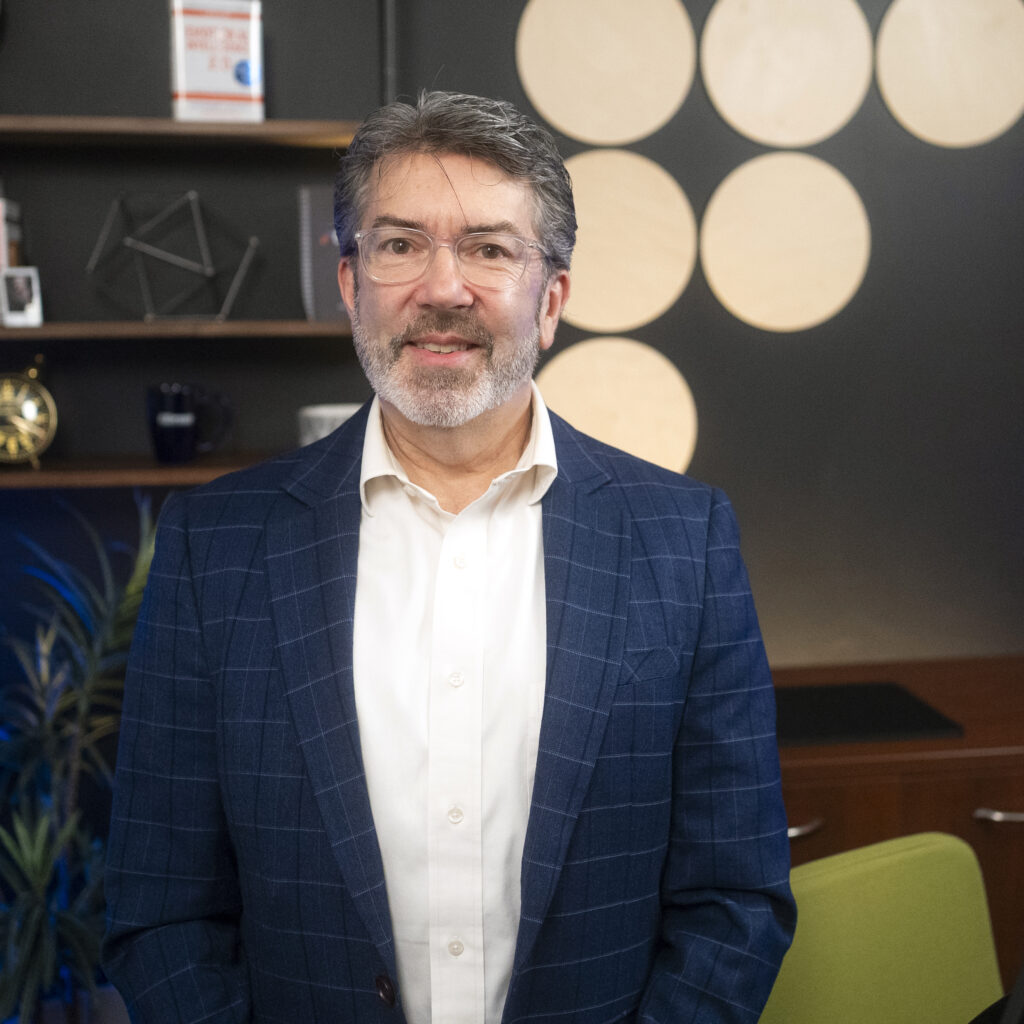
Paul Stabile – Director of Training & Development
Paul Stabile is a seasoned Training and Organizational Development professional with a passion for leadership development, team effectiveness, and driving meaningful change within organizations. With over two decades of experience, Paul has served as a trusted business consultant, equipping leaders with the skills to foster collaboration, enhance communication, and build high-performing teams. Throughout his career, Paul has held leadership roles at DX-Learning, Fierce Conversations, and Perrigo Company, where he designed and facilitated impactful training programs, coached executives, and developed strategic initiatives to drive organizational success. As a Master Facilitator and leadership coach, he specializes in helping individuals and teams unlock their full potential through emotional intelligence, succession planning, and change management. His extensive certifications in leadership methodologies, including Situational Leadership, Hogan Assessments, and Fierce Conversations, make him a sought-after expert in the field. Driven by a deep commitment to creating psychologically safe workplaces and empowering leaders, Paul transforms the way organizations cultivate talent, navigate challenges, and achieve sustainable growth.